HISTORIC SESSIONS
Telmak TMAK 069
Telmak TMAK 069
PAGE LAST UPDATED: 29 JULY 2026
TELMAK
AU0691/2S1
Aug 1982
AU0691/2S1
Aug 1982
MATRIX INFORMATION
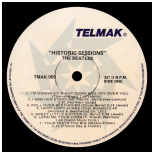
Machine Stamped - Hand Written
Machine Stamped - Hand Written
| RELEASED | SIDE 1 MATRIX | SIDE 2 MATRIX | SIDE 3 MATRIX | SIDE 4 MATRIX | PARTS |
| Aug 1982 | TMAK 069 A OR | TMAK 069 B OR | TMAK 069 C OR | TMAK 069 D OR | AU |
SLEEVE INFORMATION
| ORIGIN | CODE | CIRCULATED | SLEEVE DETAILS |
| AUST | A1 | Aug 1982 | Gatefold similar to UK but sans embossing. Inside has extra photos |
GENERAL ALBUM INFORMATION
Telmak Teleproducts was a prominent Australian television-marketing, record and general-merchandise company during the 1980s. Established in 1980 by a consortium of 15 regional television companies, its record operation commenced in January 1981 under Chief executive David Hammer, former general manager of K-tel's product division. Les Hodge, a former EMI (Australia) A&R and product manager, served as Telmak's general manager and helped oversee its recording, licensing and marketing activities. With strong shareholdings held by major Australian television stations, Telmak enjoyed extensive access to advertising airtime and quickly became a serious competitor in the highly visible—and often "loud and cheesy"—television-marketing industry.
Telmak initially concentrated on licensing and repackaging recordings by established artists such as Dolly Parton, The Animals and The Rolling Stones, often drawing on the expertise of Australian rock historian Glenn A. Baker. The similarities between some Telmak compilations and Baker's own releases on the Raven label were therefore more than coincidental. In later years, Telmak frequently licensed recordings and completed productions from Gene Pierson's Laser Records, sometimes credited as Laser Productions.
Despite achieving turnover of more than $1 million in just two and a half months of trading, Telmak encountered serious financial difficulties and entered receivership in March 1982. It was acquired in December that year by Trafalgar Financial Corporation and relaunched under Hammer, subsequently enjoying success with releases such as the novelty album Beatle Barkers.
Telmak found its most distinctive niche in 1984 with its heavily advertised "sound-alike" packages. These were generally double albums, often sold for the price of a single record or less, containing newly recorded versions of contemporary hits performed by session musicians rather than the original artists. The company could sometimes place these imitations on the market before the major record companies had released comparable compilations featuring the original recordings, drawing considerable criticism from within the industry. This culminated in a legal challenge by CBS Records Australia in 1987 that resulted in Telmak being instructed to make it prominent on its packaging when songs had not been recorded by the original artists.
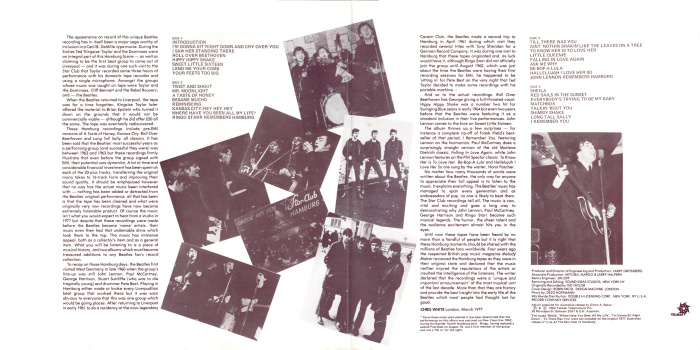
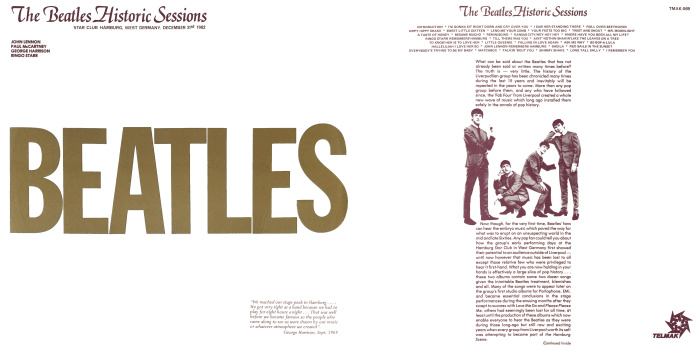
In August 1982, Telmak released Historic Sessions, the second significant Australian issue of the Beatles' Star-Club recordings. Licensed from the New York-based Double H Licensing Corporation, its track listing closely followed the expanded 1981 British Audiofidelity Enterprises release. The Australian edition also included interviews with John Lennon and Ringo Starr, together with additional photographs on the gatefold inner sleeve. These local additions were prepared by Australian rock historian Glenn A. Baker.
The gatefold sleeve contained the same Chris White liner notes as Live! At The Star-Club In Hamburg, although now there was a postscript 'correcting' the date the recording was made and the circumstances surrounding Ringo's 'coincidental' appearance - see image below.
Mouseover the above sleeve image to see the inner gatefold.
Historic Sessions became a familiar sight in service stations and department stores across Australia, proving particularly popular on the convenient cassette format.
Telmak initially concentrated on licensing and repackaging recordings by established artists such as Dolly Parton, The Animals and The Rolling Stones, often drawing on the expertise of Australian rock historian Glenn A. Baker. The similarities between some Telmak compilations and Baker's own releases on the Raven label were therefore more than coincidental. In later years, Telmak frequently licensed recordings and completed productions from Gene Pierson's Laser Records, sometimes credited as Laser Productions.
Despite achieving turnover of more than $1 million in just two and a half months of trading, Telmak encountered serious financial difficulties and entered receivership in March 1982. It was acquired in December that year by Trafalgar Financial Corporation and relaunched under Hammer, subsequently enjoying success with releases such as the novelty album Beatle Barkers.
Telmak found its most distinctive niche in 1984 with its heavily advertised "sound-alike" packages. These were generally double albums, often sold for the price of a single record or less, containing newly recorded versions of contemporary hits performed by session musicians rather than the original artists. The company could sometimes place these imitations on the market before the major record companies had released comparable compilations featuring the original recordings, drawing considerable criticism from within the industry. This culminated in a legal challenge by CBS Records Australia in 1987 that resulted in Telmak being instructed to make it prominent on its packaging when songs had not been recorded by the original artists.
In August 1982, Telmak released Historic Sessions, the second significant Australian issue of the Beatles' Star-Club recordings. Licensed from the New York-based Double H Licensing Corporation, its track listing closely followed the expanded 1981 British Audiofidelity Enterprises release. The Australian edition also included interviews with John Lennon and Ringo Starr, together with additional photographs on the gatefold inner sleeve. These local additions were prepared by Australian rock historian Glenn A. Baker.
The gatefold sleeve contained the same Chris White liner notes as Live! At The Star-Club In Hamburg, although now there was a postscript 'correcting' the date the recording was made and the circumstances surrounding Ringo's 'coincidental' appearance - see image below.
Mouseover the above sleeve image to see the inner gatefold.
Historic Sessions became a familiar sight in service stations and department stores across Australia, proving particularly popular on the convenient cassette format.
